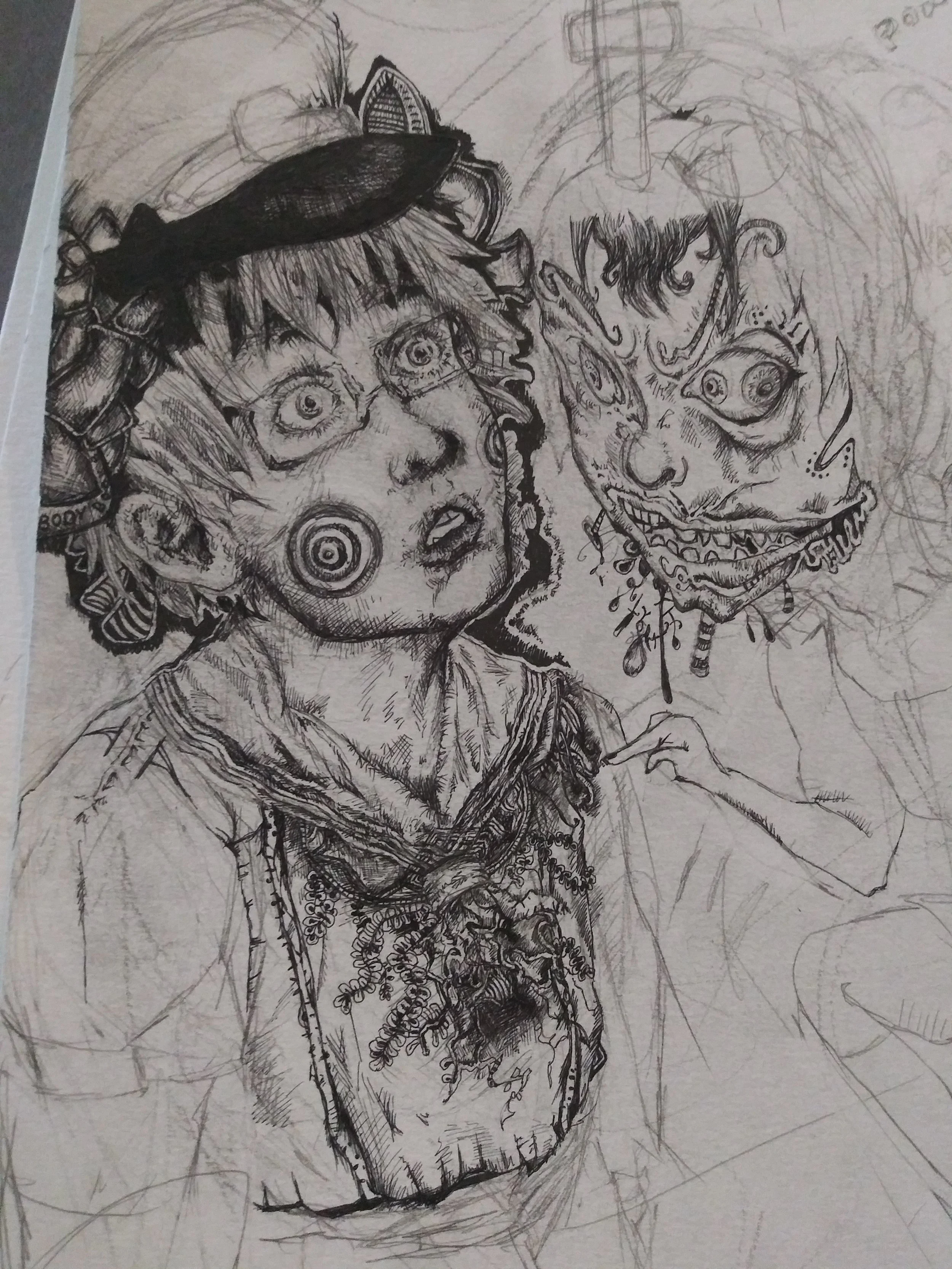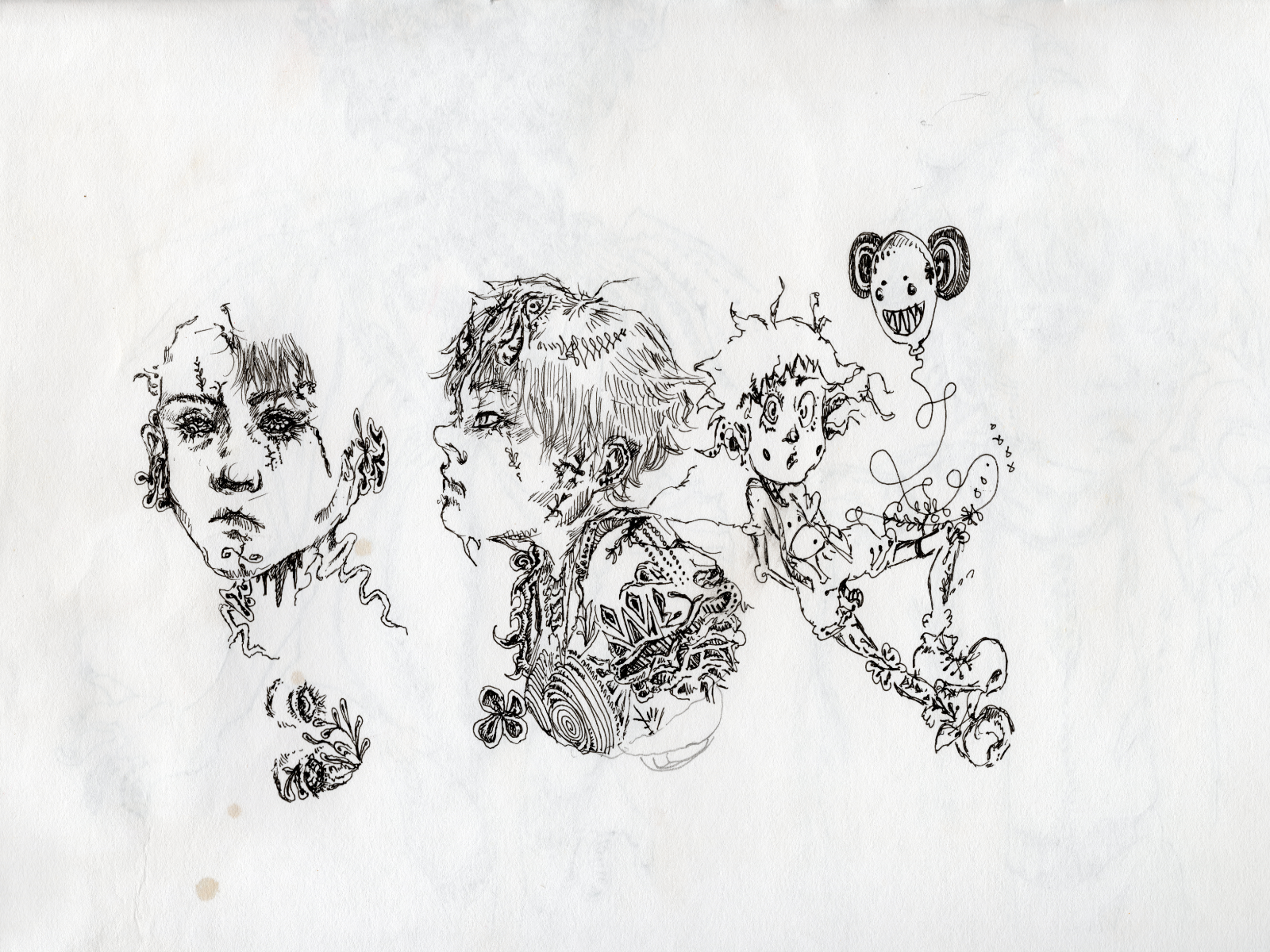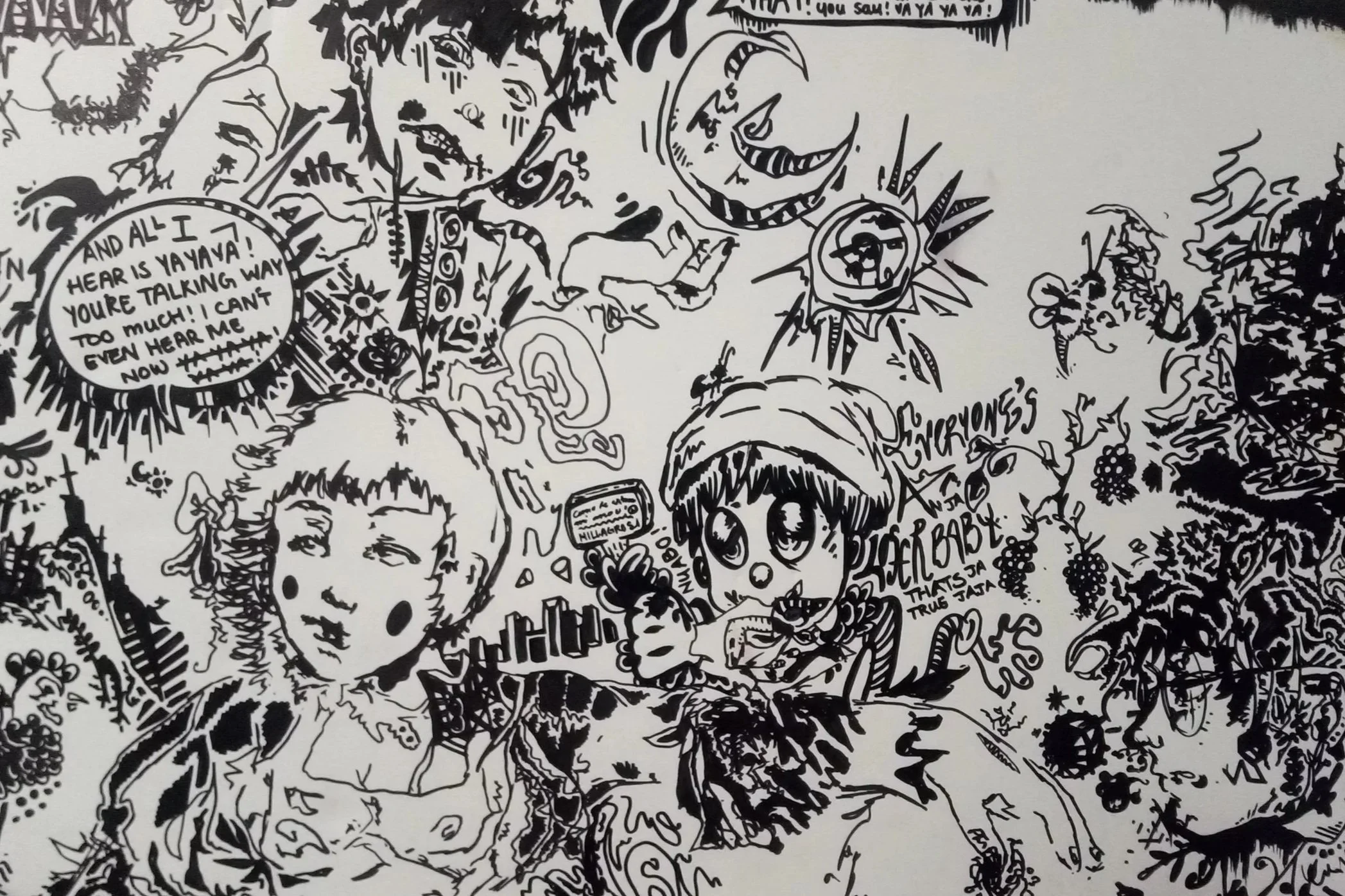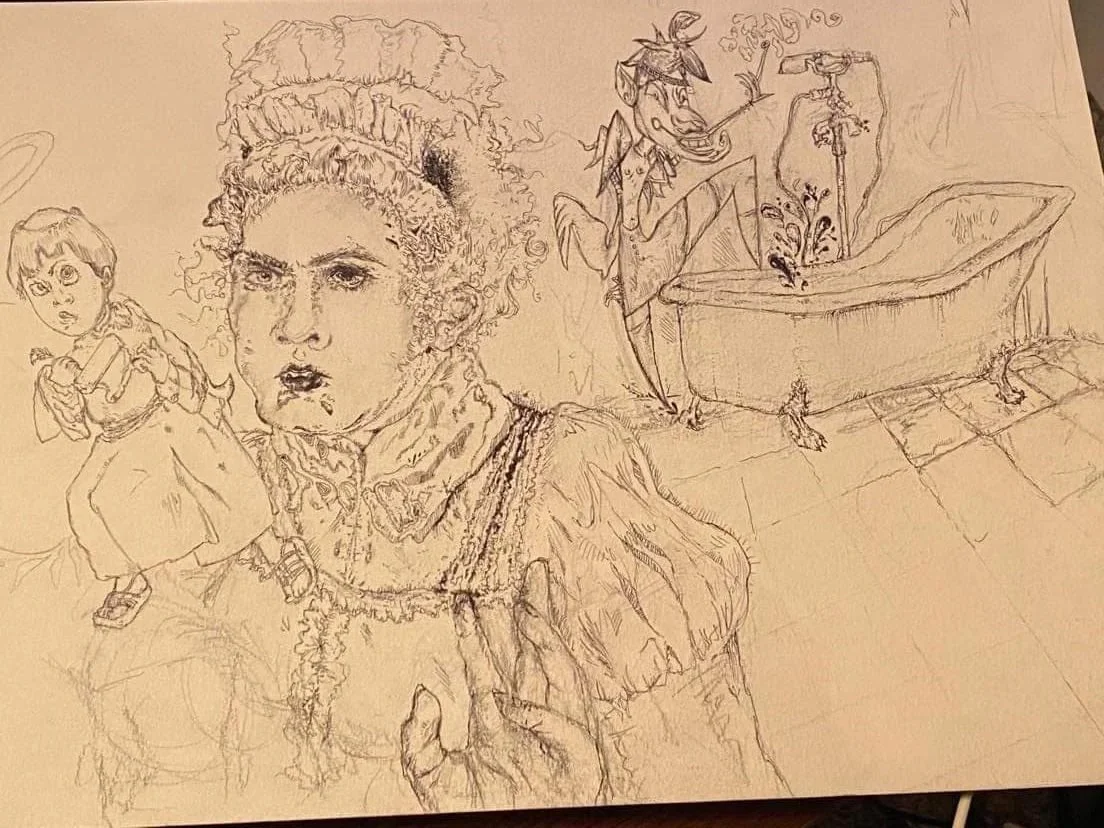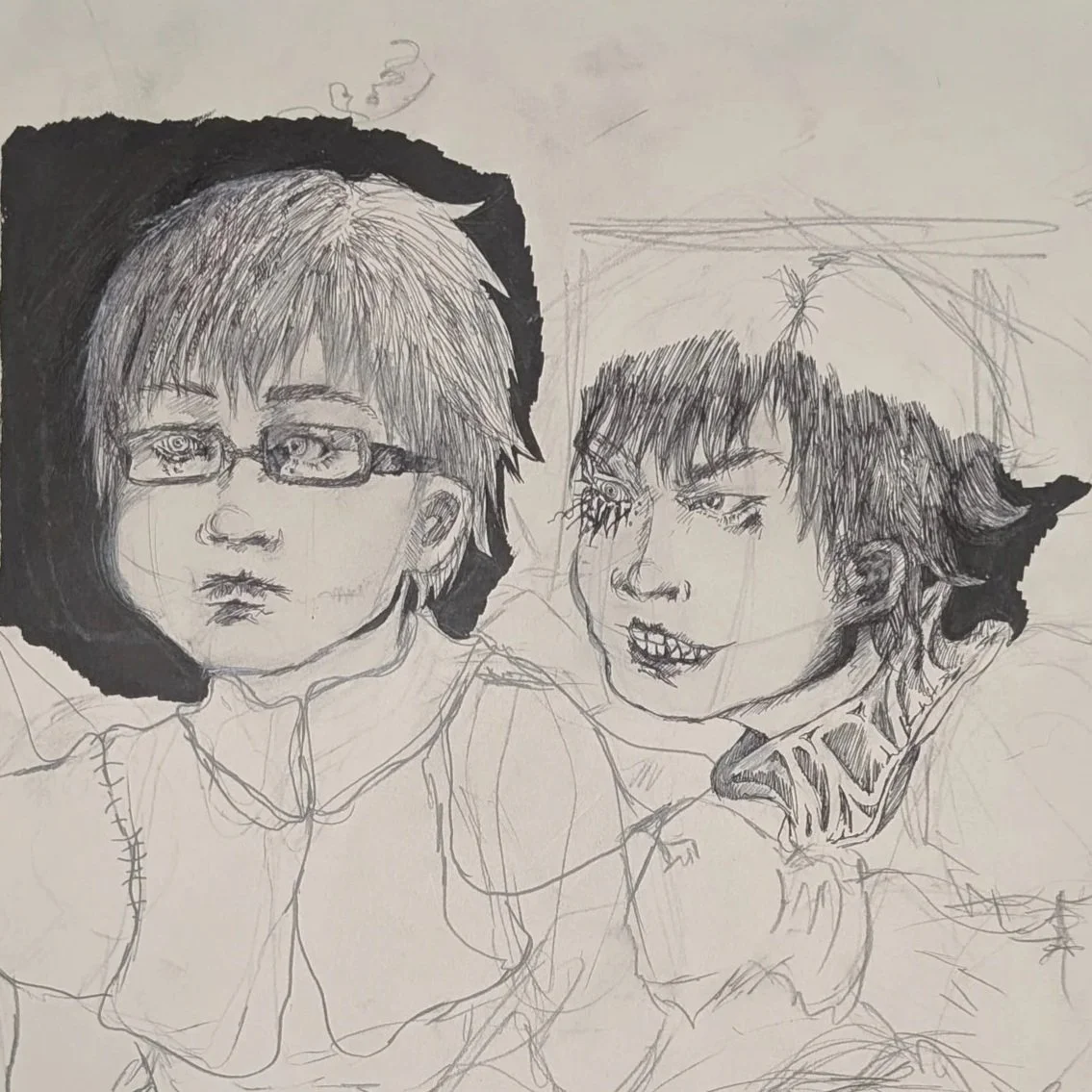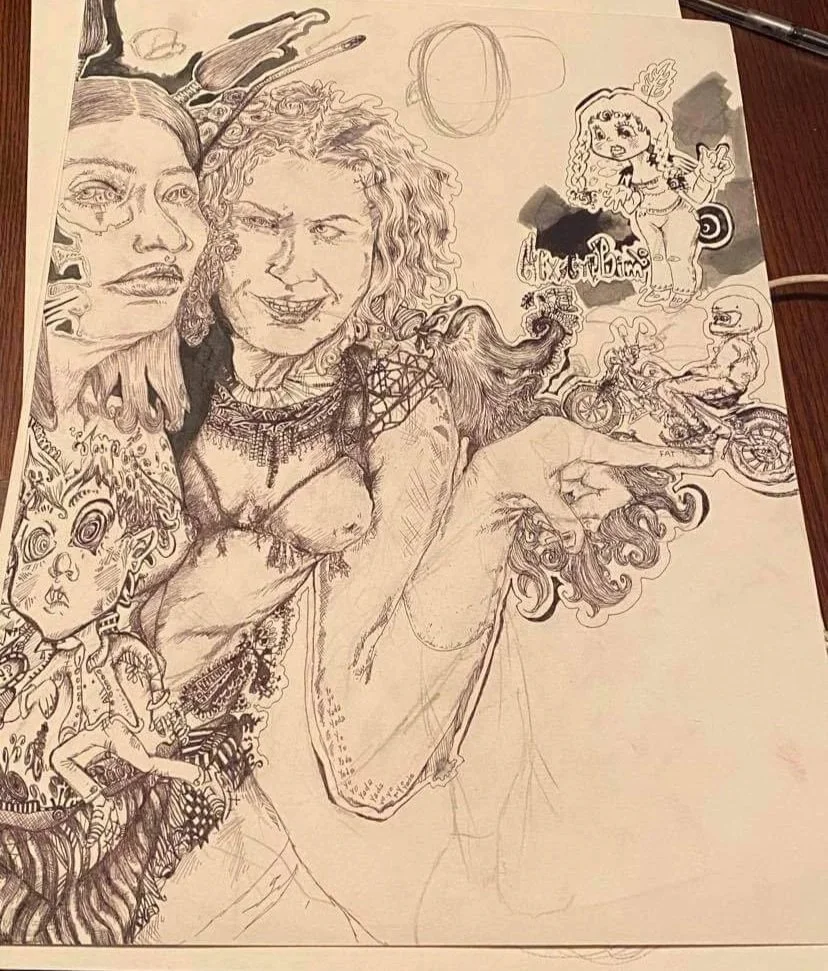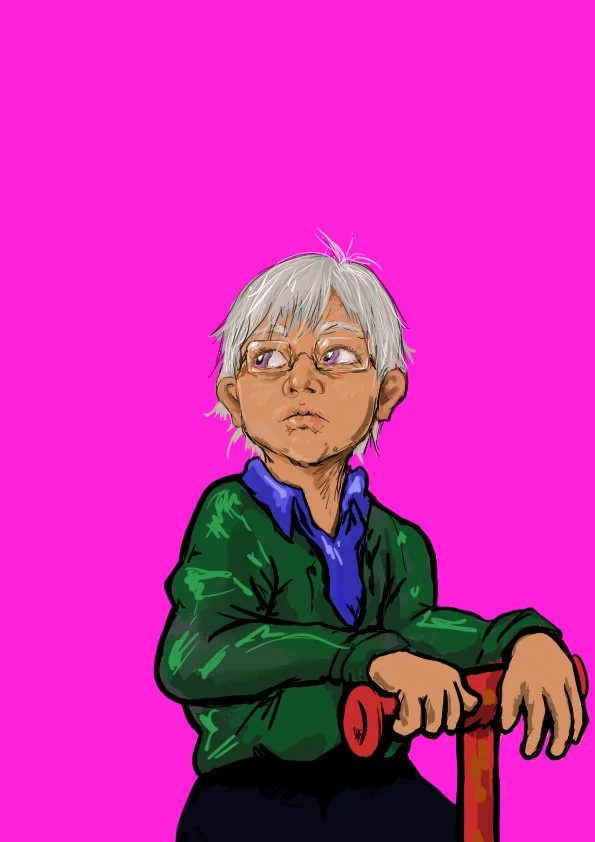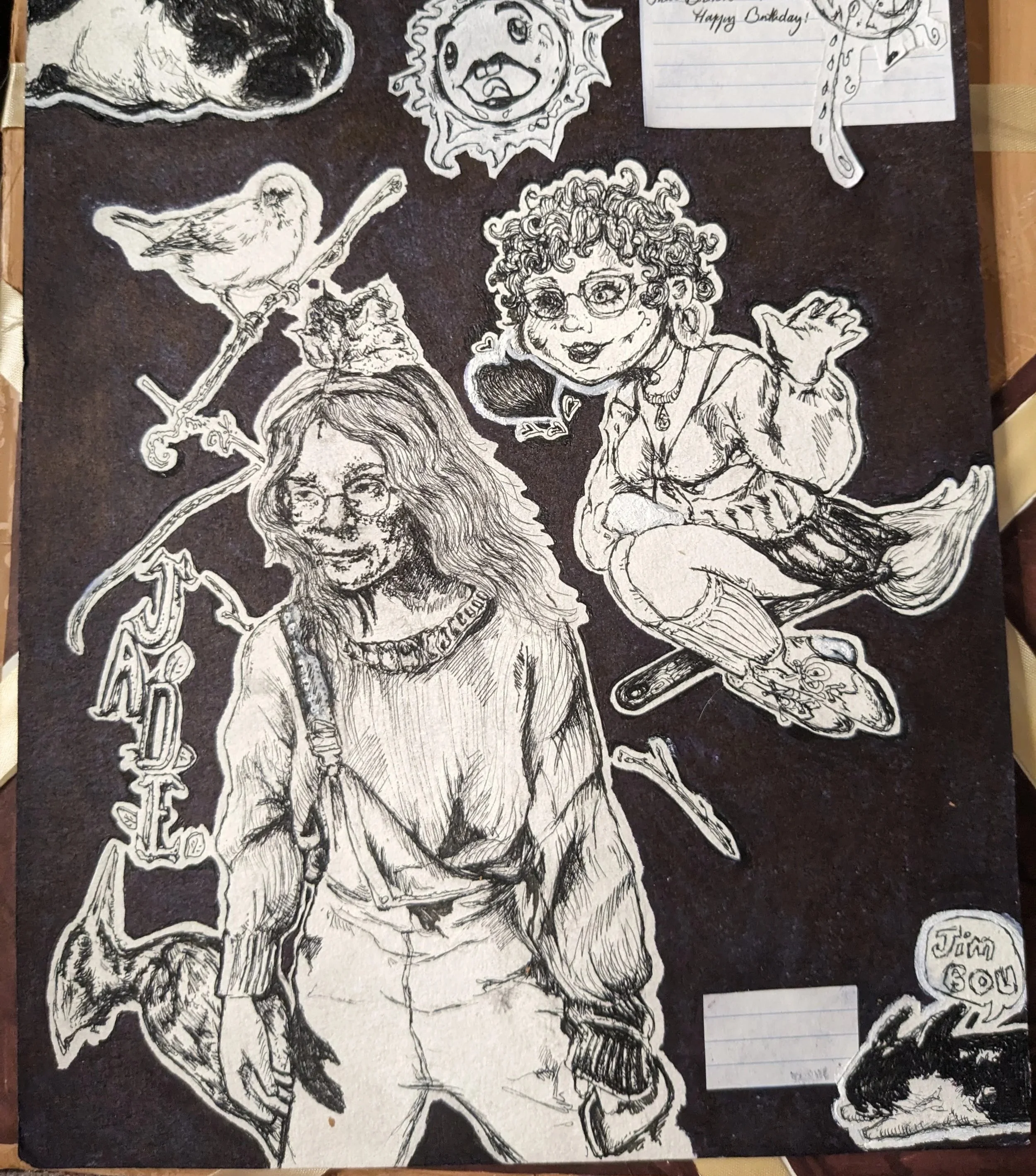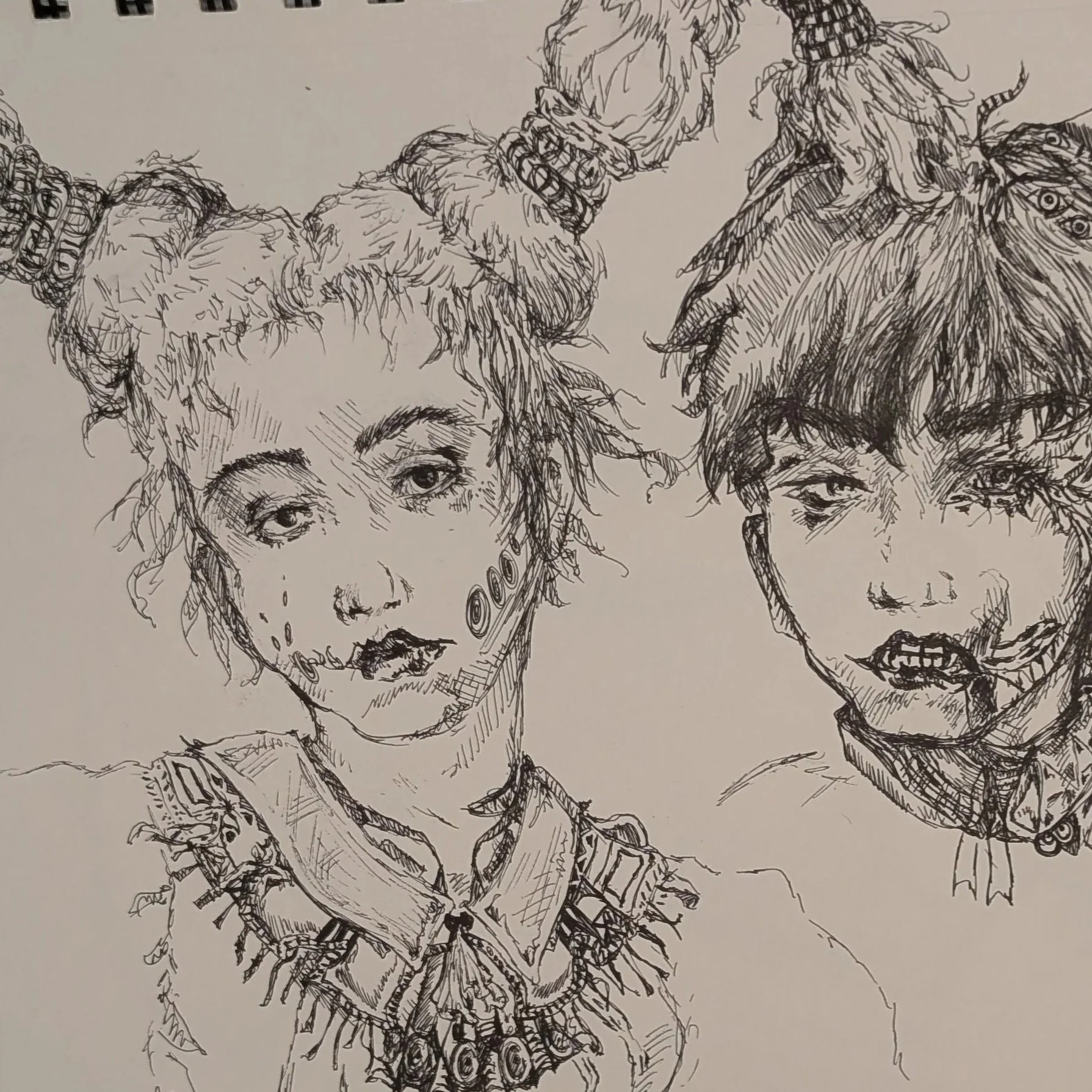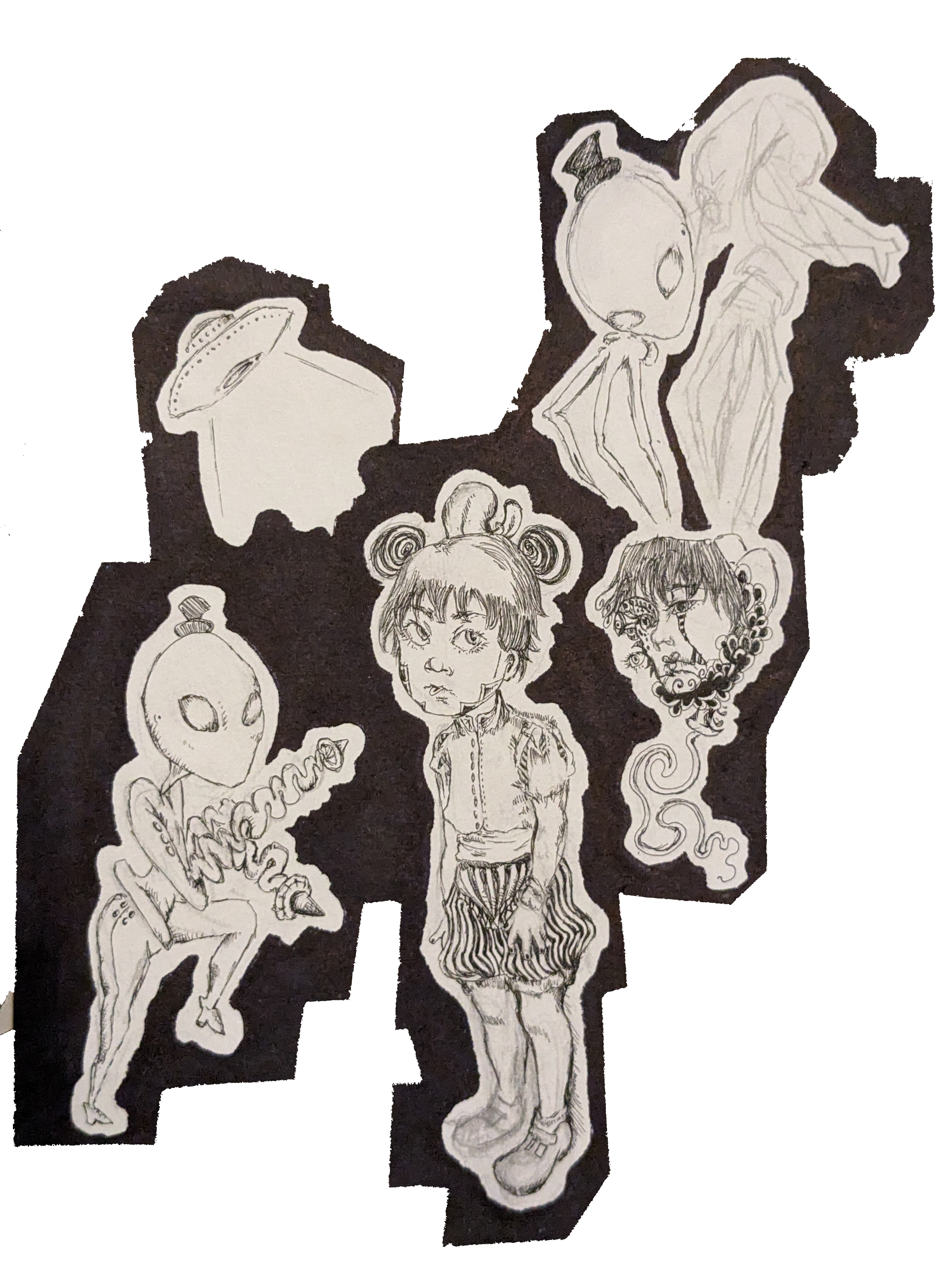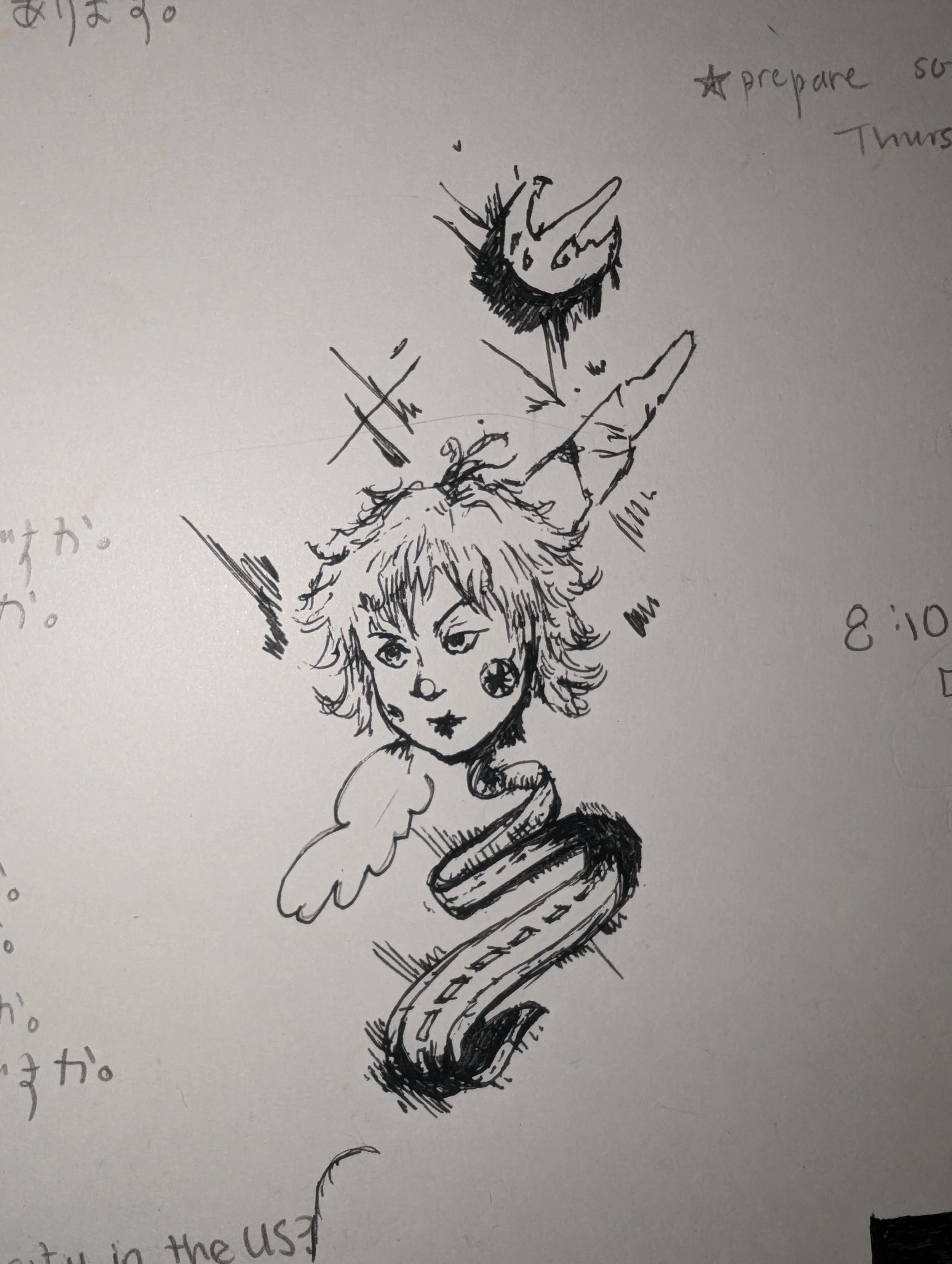
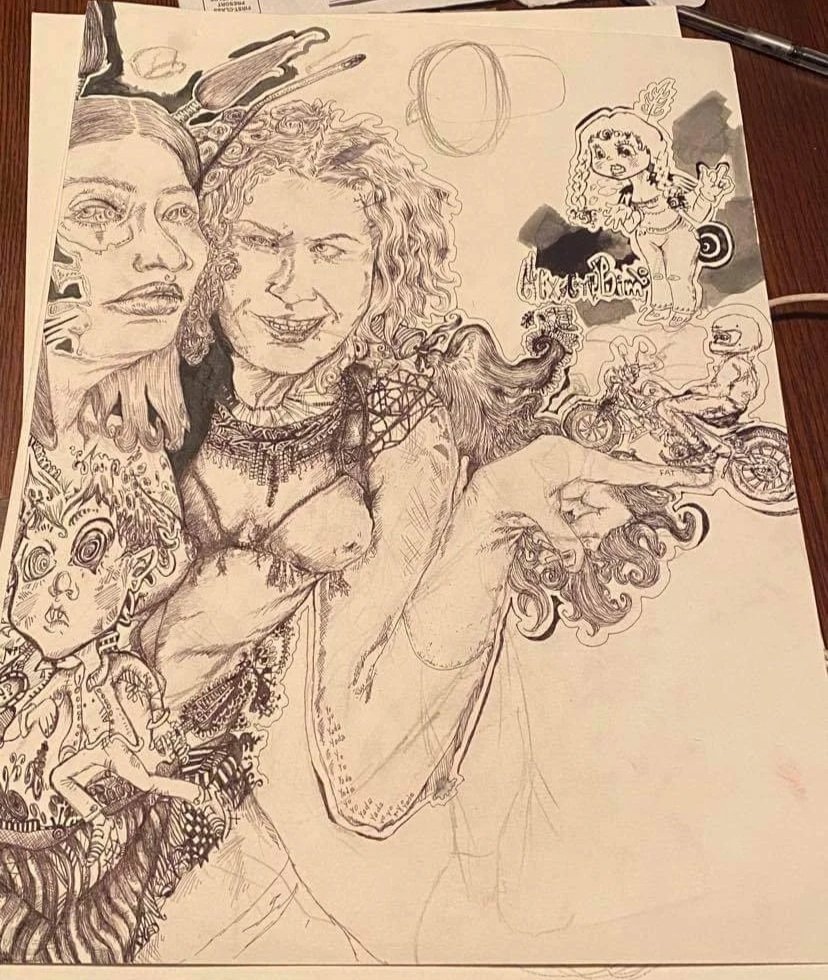
Roughly, this is how ideas arrive:
The urge usually hits me like an itch. I know once I finish with the execution of an idea, much like a good scratch, the outcome will be satisfying. My ideas arrive by ‘catching feelings’. I fish for ideas in my daily life. Sometimes through a photograph, a memory, a movie I watched, or a book I read. A symbol so powerful it strikes me like a bullet. A symbol I intend to execute to PERFECTION.
Initial materials usually consist of paper, a 0.7 mechanical pencil, and my 0.35 nib pen.
I’m particular about the nib of my pen, it has to be thin, precise and capable of rendering extreme detail. I’m the sort of artist that likes to get up close and personal.
It's the feeling of a pen scratching the surface of a paper, watching the thin lines amalgamate and create something beautifully grotesque. You never know what’s going to happen, will the flick of my wrist make the line go where I want it to? Or will I get distracted (hello, cat) and fuck it up?
So what happens if I do? Fuck that line up? What next?
You’re going to adapt.
It's an important life skill, but as an artist it should be in your nature to adapt. Being curious and weird is in your job description. So, explore. And keep fucking up, that’s the only way you’ll get to any of the good stuff.
Part of the reason I draw with a pen is to anchor myself on the canvas, in a way it's giving control to the parts of myself I don’t want to accept. The mistakes I make, and how I choose to adapt. It’s my way of combating imperfection and embracing emotional freedom.
Part of the reason I draw with pencil is to retain control of certain outcomes, so a canvas usually begins with both pen and pencil. The process consists of using both tools to express something between control and freedom of expression.
So, I outline the piece with pen and pencil, sketching and inking as I go along.
I’m a bit of a dirty perfectionist, and the evidence lies on how LONG my pieces take me. A duty I feel as an artist is to give spectators a reason to stop and stare. Every crevice is addressed. If your eyes are resting on my work, I’m going to give you a buffet. Dinner and dessert.
The density in my work isn’t there as a compulsion, it’s quite deliberate. Empty space would invite the viewer to lose interest. By filling the space I incentivise the viewer to stay, to be held inside the work long enough to experience it.
Now, that need to be understood may be where the real compulsion lies. Ineligibility. Being looked past. Existing in places where I’m not supposed to be.
My goal is to grip the viewer by the collar and touch noses. Kiss, and touch complexity.
I need you to look at me. That’s the sort of stimulation I live for.
I started drawing to prevent myself from running out of my seat during class, which I often want to do. Or rocking back and forth, or biting my nails. These are socially unacceptable (so I’ve been told.)
I used to think that part of how my brain makes ‘meaning out of nothing’ was tied to my ever growing list of mental illnesses (well there you have it folks, it’s clinical) but I don’t want to give them credit for all the glory I deserve (I’m not sane, I compete with my own mental illnesses.)
I’m usually making art in spite of my insanity (BPD, I’m looking at you in particular).
It’s difficult to create meaning through your work when you’re struggling to find meaning in your daily life. So, when I say I make art in spite of my mental illness, I mean these parts of myself can be seriously crippling that even brushing my teeth feels deserving of applause.
Confrontation serves an important function in my work by allowing me to process experiences in a safe and productive way. I carry BIG FEELINGS, ones that demand attention. In the instances that I question, the canvas gives me the space to ponder, process and execute.
The execution forms the answer.
“Can you see me?”
Now, do me a favor, and tell me if you do.